Why Hospitality-backed Villas are Outperforming High-rise Living
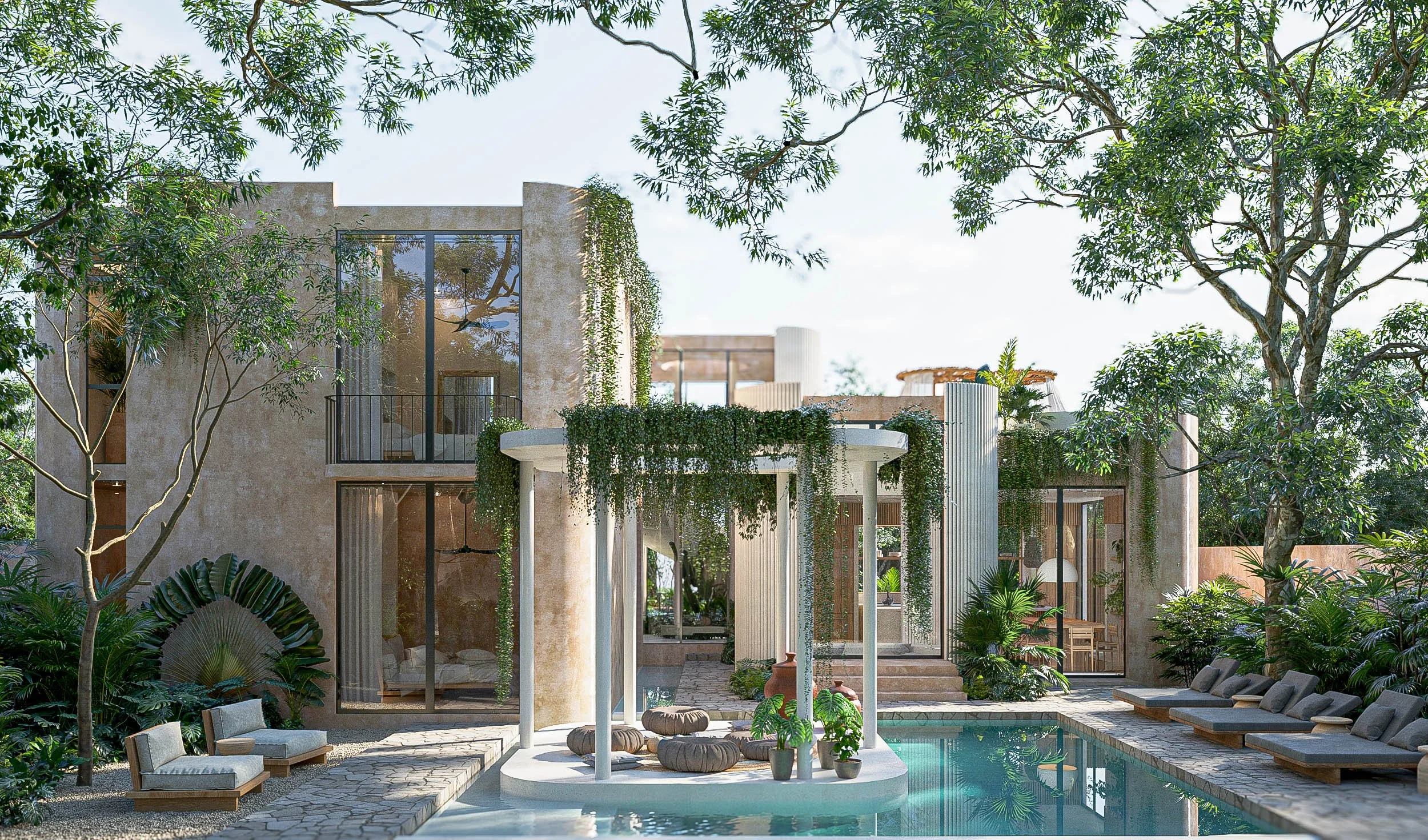
Luxury real estate has entered a new cycle.
For more than a decade, the branded-residence category was dominated by hotel-attached towers and mixed-use developments carrying names like Four Seasons, St. Regis, Porsche Design, or Mandarin Oriental. These projects shaped the category and helped globalize the idea of branded living.
But that is not where luxury demand is moving today.
High-net-worth buyers in the US, Mexico, the Caribbean, and the Middle East have shifted their preferences toward low-density, villa-driven residential communities supported by full-service hospitality. Privacy, nature, wellness, and operational consistency are now the core drivers of luxury demand, and villas deliver these advantages structurally.
The broader branded-residence category has grown over 160 percent in the last decade (Hospitality Design). But this top-line figure includes hotel towers, serviced condos, mixed-use skyscrapers, and licensing-driven apartment buildings. The fastest-growing and most undersupplied subset inside this broader category is far narrower: standalone homes and villa-style communities supported by professional hospitality operations.
This is the segment where performance is outpacing the market.
Why villas outperform density
Standalone architecture unlocks what high-rise projects simply cannot deliver: privacy, nature immersion, quiet, and a sanctuary-like experience. Villas remove the psychological friction of elevators, crowded pools, and shared spaces. They give buyers sovereignty over their environment.
Demand reflects that shift. A global survey shows that nearly 40 percent of luxury buyers are willing to pay a premium specifically for branded or hospitality-backed homes (Erin Boisson Aries). And in markets where villas function like small-scale resorts—supported by concierge, housekeeping, wellness programming, and integrated service teams—annual yields reach 8 to 9 percent, compared with 2.5 to 3.5 percent for standard urban luxury condos (Aurum PropTech).
This performance gap is structural, not cyclical.
Villas generate stronger ADRs, benefit from longer lengths of stay, and command premium positioning in markets where nature, wellness, and privacy are core value drivers.
Where this shift is most visible: Tulum
Bali. Los Cabos. Turks and Caicos. All followed the same pattern: early architectural innovation, rising global demand, limited supply of true luxury, and a maturing hospitality ecosystem.
Tulum is now tracing that same arc, just earlier in the cycle.
International demand is rising, infrastructure is improving, nature-integrated design is becoming the standard, and hospitality-backed villa communities remain scarce relative to demand. In this environment, villa-based inventory is not only outperforming, it’s becoming the dominant expression of luxury.
Why this matters for brokers and advisors
Brokers need inventory that differentiates. Buyers need assets that make emotional and financial sense. Hospitality-backed villas solve both sides of the equation.
The broader branded-residence numbers tell the story of macro growth. The villa-specific performance tells the story of the future.
And that future is not vertical.
The next decade of luxury will be shaped by privacy, wellness, nature, and hospitality-backed residential experiences delivered through low-density villa communities, not high-rise towers.
Those who understand the distinction early will lead the clients who shape the market.
Learn More
For a private briefing tailored to brokers, investors, or family offices, you can reach me here: https://akil.app/investment-briefing